



What Are the Regulations of Football in the UK?

The rules and regulations of football are pretty long. They cover everything from free-kicks and offsides, to what players can wear in a match, who can sponsor a team, and anti-doping rules.
You might not know that rules in football are actually called ‘laws’.
This guide focuses specifically on the laws of football, as outlined in the FA’s football rules and regulations. We’ll explain what the laws are, and what the International Football Association Board (IFAB) actually does to govern the laws of the game.

What are the laws of football?
You might think there are thousands of football laws. After all, when you bet on football there are hundreds of different bet types to make, on everything from corners and goals to player cards and the timings of certain events.
And yet, there are only 15 laws in football.
Football in the UK follows these laws, as outlined by IFAB. The FA is in charge of implementing the laws for English clubs, while the Welsh FA does the same for Welsh clubs, etc.
Here’s a quick look at each law:
Law 1 – The field of play
The pitch must be made of grass, hybrid, or agreed artificial surface. It must be green! The field has to be marked out with the correct lines. The touchline can be any distance from 90m to 120m, and the goalline 45m to 90m. The international standard is for pitches to be 100m to 110m in length and 64m to 75m in width. You’re not allowed to advertise on the actual pitch, as they do in sports like rugby and cricket.
Law 2 – The ball
Yes, there are laws about the ball. If anything, this is the law that is most necessary in football. The ball has to be spherical, have a circumference of between 68cm and 70cm, and weigh no more than 450g. If the ball pops when a free kick, penalty, goal kick, etc is taken then the set piece is retaken.
Law 3 – The players
It makes sense to have a law about the players. There’s the simple stuff like each team requiring 11 players, including one goalkeeper, to start a match. Teams can make five substitutions in three ‘substitution opportunities’ through the game. Teams get an extra sub in extra time if they’ve maxed out their subs already.
Law 4 – The players’ equipment
Players must wear what they’re told to wear. That means no jewellery (necklaces, rings, bracelets, earrings, leather bands, rubber bands) and using tape to cover jewellery isn’t permitted. They must wear a shirt with sleeves (sorry, Cameroon lads from 2002!), shorts, socks, shin pads, and footwear. Captains must wear an armband.
Weirdly, it’s stated that players can’t wear electronic communication devices while playing. Someone must have tried this at some stage! Players cannot display political, religious or personal slogans, statements or images. There’s a ban on undergarments being flashed unless they only show the manufacturer’s logo (sorry, Mr Bendtner).
Law 5 – The referee
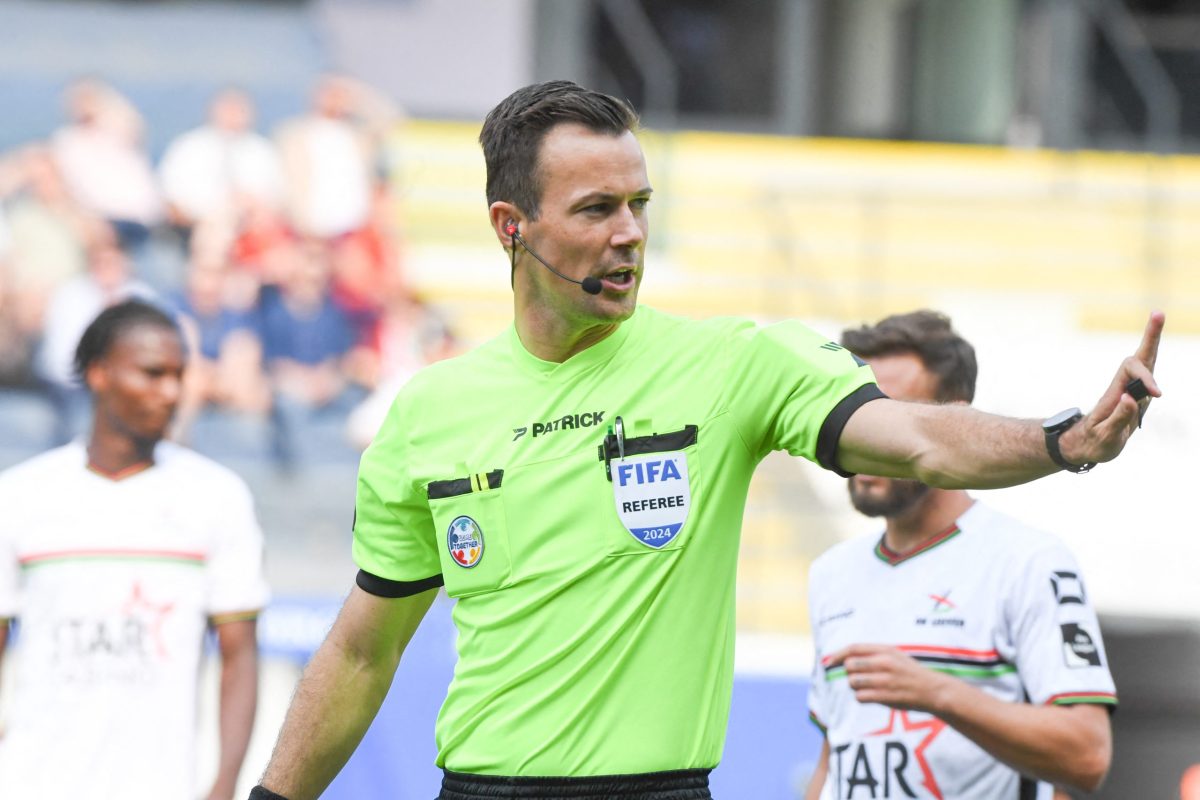
The ref “has full authority to enforce the Laws of the Game in connection with the match”. Their decision goes and their job is to “enforce the Laws of the Game”. Refs have to orchestrate timekeeping, stoppages, injuries, and discipline. They are also in charge of VAR, which can only help a referee on: goals/no goals, penalties/no penalties, direct red cards, and mistaken identity. Referees must carry four pieces of equipment: whistle, watch, red and yellow cards, notebook. Nowhere does it say referees have to be clothed.
Law 6 – Other match officials
Other match officials consist of: two assistant referees, a fourth official, two additional assistant referees, a reserve assistant referee, a video assistant referee (VAR) and at least one assistant VAR. Football quickly got rid of the ‘two additional assistant referees’ standing behind goal lines, when goal-line technology made them redundant.
Assistant referees can only indicate a decision when the ball goes out of play, an offside happens, a foul is committed, a substitution is required, and when the ball has crossed the goal line.
Fourth officials basically act as silent policemen and women in the technical area. They supervise substitutions, monitor and display added time, and receive abuse from managers.
Law 7 – Duration of the match
A football match is 90 minutes long (two equal halves of 45 minutes) unless the referee and the two teams agree to a change beforehand. This happens in pre-season friendlies, for example. It’s not going to happen at the World Cup. Half time is 15 minutes long, and extra time 30 minutes (two halves of 15 minutes) when required.
Now, the laws of the game explain what causes time to be added on at the end of a game. This includes: subs, injuries, time wasting, disciplinary incidents, drinks breaks, VAR reviews, goal celebrations (yes, goal celebrations!), outside interference. In 2022 a crackdown on time-wasting and a requirement for referees to be more diligent in stopping their watch during goals, substitutions, and injuries meant stoppage time ballooned. England vs Iran at the Qatar World Cup had 24 minutes of added time.
Law 8 – Start and restart of play
Football games start with a kick off. Every time a goal is scored, the team that concedes kicks off. The second half also restarts with a kick off. Referees can award a dropped ball if they pause the match for e.g. an injury.
Law 9 – The ball in and out of play
This is a simple one. The ball is out of play when all of it crosses a boundary line, or when play has been stopped by the referee. It is also deemed ‘out of play’ if the ball hits an official and results in a team going on the attack, the ball directly going in the goal, the team in possession of the ball changes.
Law 10 – Determining the outcome of the match
The team that has scored the most goals at the end of regulation time (90 minutes plus stoppage time) is declared the winner. If the scores are level, then it’s a draw. A goal is granted if the full ball crosses the goal line. Penalty shootouts (five penalties each) are used to decide the victors in knockout competitions if the scores are still level after extra time.
Law 11 – Offside
How often have you heard that bloke in the pub wrongly assume someone was offside? Here’s the definitive offside law. A player is in an offside position if:
any part of the head, body or feet is in the opponents’ half (excluding the halfway line) and
any part of the head, body or feet is nearer to the opponents’ goal line than both the ball and the second-last opponent
That’s why a player’s toe can be considered offside. The toe is a goalscoring part of a player’s body, and is between the second-last defender and the goal when the ball is played.
A player is deemed to have committed an offside offence if they interfere with play (such as touching the ball) or affect another player’s ability to play the ball.
Law 12 – Fouls and misconduct
Brace yourself. There’s a lot of football rules to go over here. Direct free kicks are given for being “careless, reckless or using excessive force” when challenging an opposition player for the ball. The same goes for handballs, biting and spitting. Indirect free kicks are given for things like dissent and impeding “the progress of an opponent without any contact being made”. Did you know a free-kick is awarded if a player “initiates a deliberate trick for the ball to be passed to the goalkeeper”? That means you can’t knock the ball up to your head and nod it into the keeper’s hands, as it would be a back pass.
There are other rules around cautionable offences but what’s really interesting is goal celebrations. According to the football rules, celebrations “must not be excessive; choreographed celebrations are not encouraged and must not cause excessive time-wasting”.
We’ll leave it for you to read the rest of Law 12 in football on the FA’s website.
Law 13 – Free-kicks
A free-kick is awarded to the opposing team if a player, substitute, substituted or sent-off player, or team official is guilty of an offence. The difference between a direct and indirect free-kick is you can’t score from the latter. It must touch another player before crossing the goal line. There are two weird rules here you might not be aware of:
if an indirect free kick is kicked directly into the opponents’ goal, a goal kick is awarded
if a direct or indirect free kick is kicked directly into the team’s own goal, a corner kick is awarded
So, a player can feasibly take a free-kick and pass it back to their goalkeeper, accidentally over-hit it and find the net instead. In this instance, the opposing team would earn nothing but a corner.
Law 14 – Penalties
A penalty is awarded if an offence outlined in Law 12 and Law 13 is committed in the penalty area. The penalty taker only has one touch with their kick. If they hit the post, they can’t be the first to tough the rebound. Meanwhile, the goalkeeper must have at least one foot on or behind the goal-line when the kick is taken.
Here’s another weird little fact. You know the semi-circle dome that comes out from the penalty box that players aren’t allowed in during a spot kick? That dome marks the 10-yard minimum distance players must be from the ball when a kick is taken.
Law 15 – Throw-ins
Players take throw-ins when the ball goes out of play down the lengths of the pitch. A player must have both feet on the ground when releasing the ball and hold the ball with both hands. The throw is awarded to the team that didn’t touch the ball last. Opposing players myst stand two yards from the throw-in taker.
Now, once the thrower throws the ball they cannot touch it again until someone else does. Theoretically, if a thrower launches the ball into their own penalty area and touches it before anyone else, the opposing team are awarded a penalty.
Law 16 – The goal kick
A goal kick is awarded when the attacking team last touch the ball as it goes out of play behind the opposing team’s goal line. The goal kick must be taken from within the smaller box in the penalty area, with anyone allowed to take it. Opponents must be outside the penalty area until the ball is in play. Players cannot be offside from a goal kick.
17 – The corner kick
Corners are awarded when the defending team last touches the ball before it goes out of play behind their goal line. The corner taker must place the ball within the corner arc (the quarter-circle in the corner of the pitch) in order to take the corner. Amazingly, some players still don’t seem to get this and place the ball outside the arc, which is sometimes not spotted by the referee.
What is IFAB?
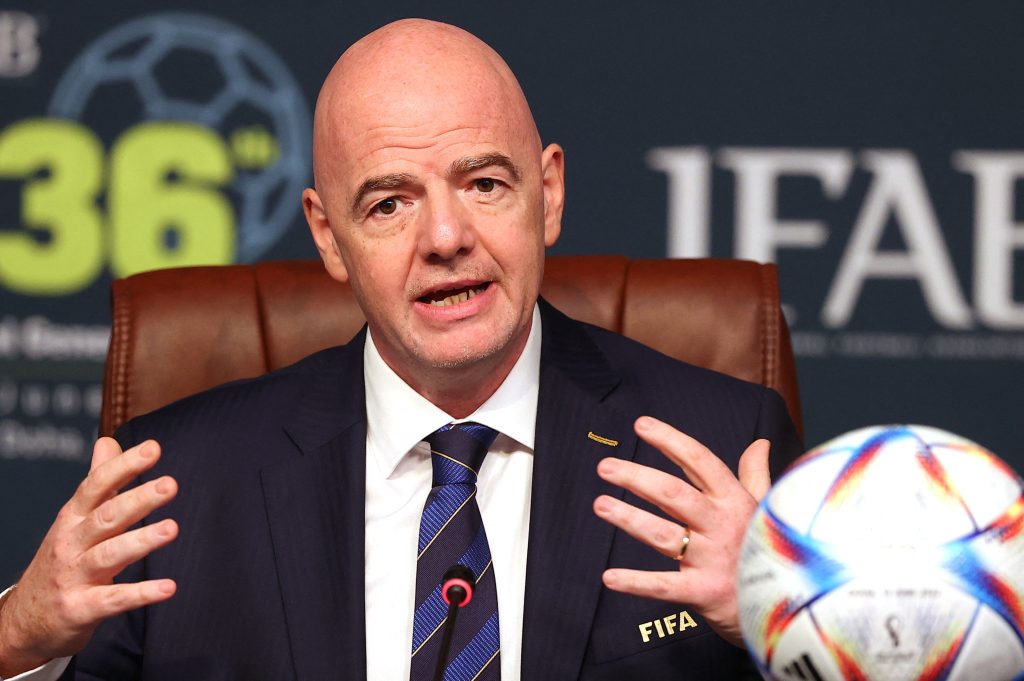
IFAB is the governing body that oversees the laws of football. It is independent from the likes of FIFA and UEFA, although FIFA has a 50% control of the board. IFAB was created by the football associations of England, Scotland, Northern Ireland and Wales. They still hold permanent seats on the board, which irks the likes of Spain, France, Germany and Brazil who consider the UK nations as protecting their self interests. No wonder England didn’t win the 2018 World Cup hosting rights with their tagline “It’s Coming Home”.
FIFA can’t change any of the rules and regulations of football without approval from the rest of IFAB. Basically, the UK football associations hold far greater power on world football than anyone else.